What is Verbal Behavior Therapy?
Verbal behavior therapy is a type of Applied Behavior Analysis (ABA) that focuses specifically on teaching communication as a functional skill. Instead of treating language as memorization, verbal behavior therapy helps children understand *why* we communicate — to get what we need, to share what we feel, to connect with other people. At Climb, it’s the foundation of how we work with every child.
Language Is More Than Words
When most people think about speech and communication, they think about vocabulary — knowing the word for “apple” or being able to answer a question. But for children with autism, the challenge is often less about knowing words and more about understanding what language is *for*.
Verbal behavior therapy, developed from the work of behavioral scientist B.F. Skinner, approaches language as a behavior — something that can be taught systematically by understanding why and how people communicate. This shifts the focus from drilling vocabulary to building functional, meaningful communication that your child can actually use in real life.
The Core Idea: Verbal Operants
In verbal behavior therapy, different types of communication are taught as separate skills — called verbal operants. Here are the ones you’ll hear about most:
Mand (requesting)
A mand is a request — your child asking for something they want or need. This is usually the first skill targeted in VB therapy because it gives children a powerful, functional tool: the ability to communicate desire. A child who can request a snack, ask for a break, or say “I need help” has a meaningful way to interact with the world.
Tact (labeling)
A tact is labeling or naming something in the environment — pointing to a dog and saying “dog,” or naming a color, a feeling, or an object. Tacting builds vocabulary and awareness, but in the context of real-world communication rather than flashcard drills.
Intraverbal (conversation)
Intraverbal communication is the back-and-forth of conversation — answering questions, filling in phrases, discussing things that aren’t directly in front of you. This is often where more advanced social communication is built.
Echoic (repeating/imitation)
Echoic behavior is the ability to repeat what someone else says. It’s a foundational skill that supports language learning across all other areas.
Verbal Behavior Therapy vs. Traditional ABA:
What’s the Difference?
Both verbal behavior therapy and traditional ABA are rooted in the same science. The difference is emphasis and approach.
Traditional ABA Approach |
Verbal Behavior Approach |
| • May focus more on compliance and discrete trial training | • Prioritizes communication and language as the central goal |
| • Language often taught as receptive (understanding) skills | • Language taught across all verbal operants — especially expressive communication |
| • Can feel more structured/repetitive | • Naturally woven into play and daily routines |
Both have their place, and many strong ABA programs blend elements of each. At Climb, our verbal behavior foundation means that communication is never an afterthought — it’s the reason for everything we do.
Why We Use a Verbal Behavior Approach at Climb
We chose to build our practice around verbal behavior therapy because we’ve seen what it does for kids and families.
When a child gains the ability to communicate — really communicate — everything changes. Challenging behaviors that come from frustration often decrease. Family interactions improve. Kids become more independent, more connected, and more confident.
We work with children ages 2 through 11, and the verbal behavior framework allows us to meet each child exactly where they are — whether they’re beginning to make their first sounds or developing more complex conversational skills.
Every treatment plan at Climb is individualized, but verbal behavior principles are always the thread running through it.
What Verbal Behavior Therapy Looks Like in Our Clinic
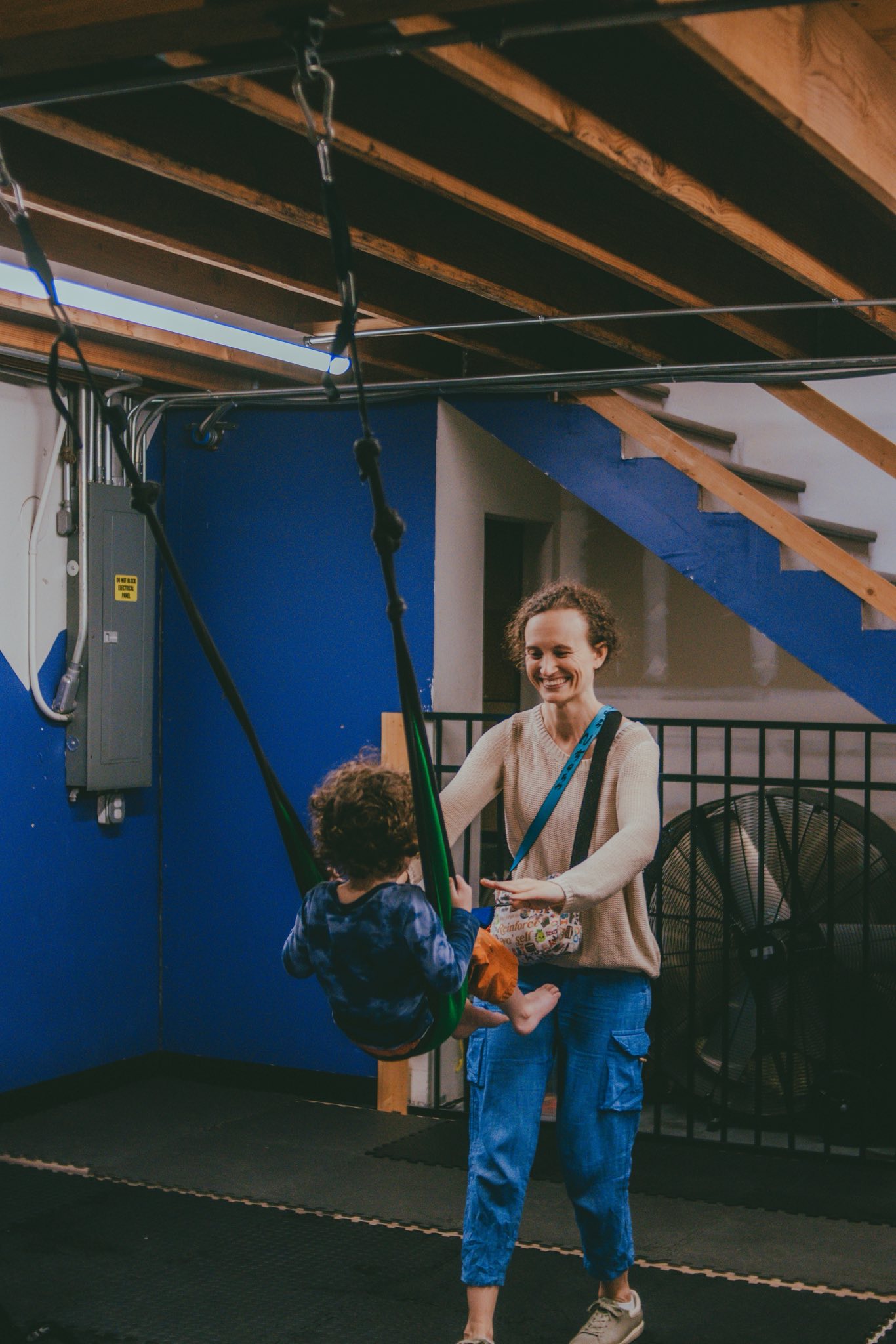
You won’t walk into our clinic and see children sitting at tables drilling flashcards for hours. Sessions at Climb are designed to be engaging, play-based, and responsive to each child’s interests and energy.
Our team takes time to understand what motivates your child — toys, activities, social connection, sensory input — and uses those motivators to make learning feel natural and rewarding. The goal is communication that your child wants to use, not just communication they’ve been trained to produce.
BCBAs at Climb design and supervise every treatment plan, with Registered Behavior Technicians (RBTs) implementing sessions under ongoing BCBA oversight.
Learn More About Our Approach
Frequently Asked Questions
Click on questions to see answers
Is verbal behavior therapy the same as speech therapy?
They overlap in goals but are different disciplines. Speech-language therapy typically addresses the mechanics of speech, articulation, and language development. Verbal behavior therapy is a specific ABA approach that uses behavioral science to teach communication as a functional skill. Many families work with both a speech-language pathologist and an ABA provider simultaneously — they complement each other well.
Is verbal behavior therapy appropriate for nonverbal children?
Yes. Verbal behavior therapy is often especially effective for children who are not yet using spoken language, because it starts by building the foundational motivation to communicate — including through alternative communication systems like AAC (augmentative and alternative communication) when appropriate.
What age is verbal behavior therapy most effective?
Research supports early intervention, particularly for children ages 2–6. That said, VB therapy principles apply across the developmental spectrum. We work with children up to age 11, and we see meaningful progress at every stage.
Does Climb's verbal behavior approach include naturalistic teaching?
Yes. We integrate naturalistic environment teaching (NET) with more structured sessions, using your child’s natural interests and daily routines as the context for learning.
What Out Clients Say

“Climb has been an absolute honor to work with. Behavior techs have all been such a dream team. Their compassion, understanding, and empathy for their clients is truly something that you don’t come by often nowadays. Clients are truly prioritized You can definitely see everyone’s hearts in their work.”
– SM
“Absolutely amazing. My daughter has been there for almost 3 years. They challenge her and teach her. She makes new progress everyday. Casey and her team have changed my daughters life in a positive way.”
– KS
“My son started talking so much more after he started this program. The teachers and managers are very kind and the facility is so nice.”
– JD